


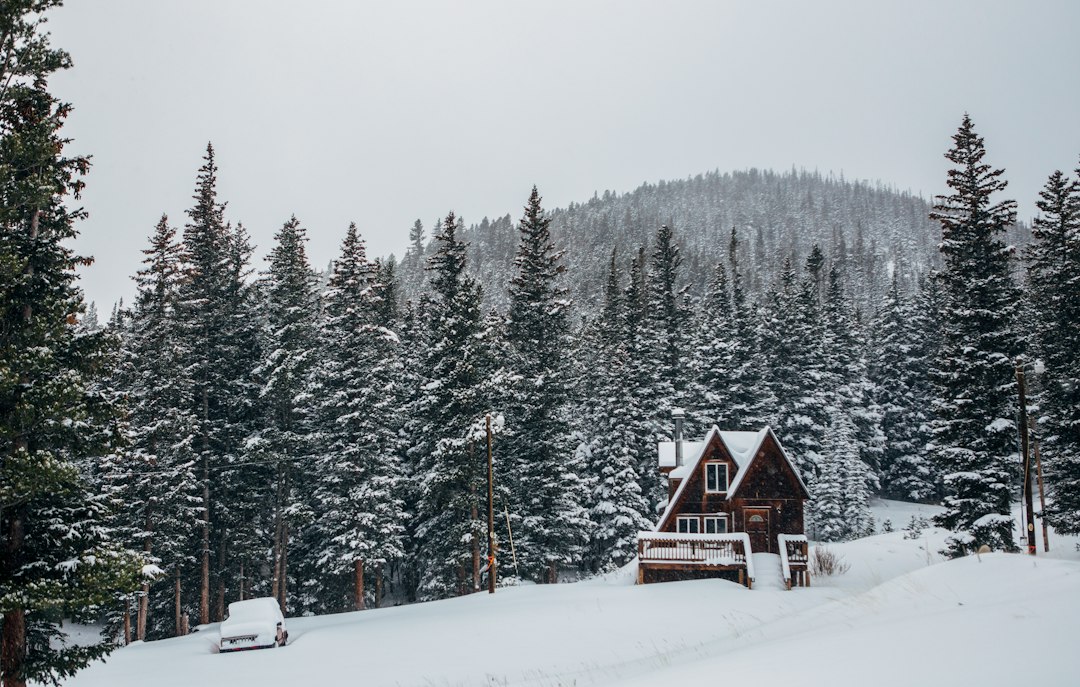
Photo via Unsplash by Greg Althoff
Before You Hit “Book”: Booking a mountain cabin in winter looks effortless on Pinterest, but real-world mountain conditions can quickly turn a dream weekend into a frozen nightmare if you don’t know what questions to ask beforehand.
Every year, thousands of eager travelers find themselves stranded at the bottom of steep icy driveways, shivering in cabins with frozen plumbing, or running out of firewood during sudden blizzards. This practical guide walks you through the exact red flags, questions, and preparations needed to ensure your winter cabin vacation goes smoothly.
1. Vehicle & Driveway Access: The #1 Hidden Trap
Many listings state “plowed driveway,” but that does not mean a 2WD compact car can climb it. Mountain driveways are often steep, unpaved, and accumulate sheet ice under fresh snow.
- AWD vs. 4WD: Always ask the host if 4-Wheel Drive (with true low-range capability) and winter tires are required. All-Wheel Drive (AWD) is great for highways, but steep mountain inclines often demand 4WD.
- Carry Snow Chains: In states like California (Lake Tahoe), Colorado, and Washington, highway patrols routinely enforce mandatory tire chain checkpoints during winter storms. Even with AWD, state law often requires carrying chains in your trunk.
2. Heating Systems: Know How Your Cabin Stays Warm
Different heating systems deliver vastly different experiences:
- Central Heating / Heat Pumps: Convenient, but heat pumps lose efficiency rapidly when outside temperatures drop below 20°F (-6°C).
- Wood-Burning Stoves: Unmatched atmosphere and radiant warmth, but you are responsible for feeding the fire throughout the night. Confirm with the host whether firewood, kindling, and matches are provided or if you must purchase bundles locally.
- Propane & Pellet Stoves: Easy-to-use thermostat controls, great heat output, and minimal maintenance.
3. The “Arrive Before Dark” Golden Rule
Never plan to arrive at a remote mountain cabin at 9:00 PM. Mountain roads lack streetlights, GPS signal often drops, and identifying an unmarked gravel driveway in a blizzard is virtually impossible. Always schedule your travel to arrive at least 1 hour before sunset.
4. Water & Plumbing: Dealing With Freezing Temperatures
During deep freezes (-10°F or lower), cabin pipes can freeze if water isn’t moving. Responsible hosts will advise you to leave cold-water faucets on a gentle trickle overnight and keep cabinet doors beneath sinks open to allow heated indoor air to circulate around plumbing.
5. Stocking Food & Essentials Before Ascending
Mountain convenience stores have limited stock and steep markups. Always stop at a full-sized grocery store in the valley before heading up the mountain. Stock up on hearty comfort foods, snacks, drinking water, and easy pantry staples in case a heavy storm delays snowplow access for 24 hours.
📋 Quick Questions to Message Your Host Before Booking
- “Is the road and driveway professionally plowed during snowstorms, and do guests need 4WD or chains?”
- “Is seasoned firewood and kindling provided for the wood stove, or should we bring our own?”
- “Is there a backup generator in case of winter power outages?”
- “What is the cellular reception like, and does the Wi-Fi support calling if cell signal drops?”