
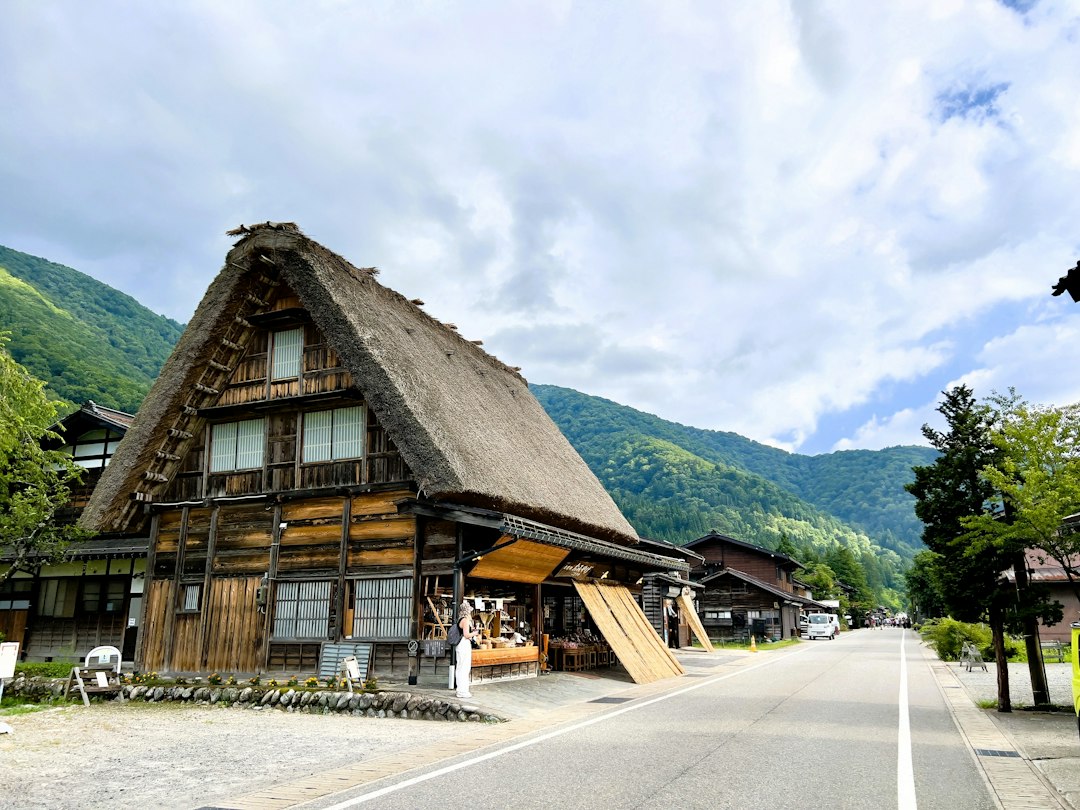
Photo via Unsplash by Kiko K
Yukiguni (Snow Country): Cold winds sweeping across the Sea of Japan from Siberia dump some of the deepest, fluffiest powder snow on Earth over the Japanese Alps. Historic farming villages look like ancient Japanese woodblock prints come to life.
Beyond the bustling neon streets of Tokyo and Kyoto’s bamboo groves lies Japan’s magical winter interior. Here are 5 traditional snow-covered villages and onsen towns that capture the poetic heart of Japanese winter.
1. Shirakawa-go & Gokayama (Gifu Prefecture)
A UNESCO World Heritage village famous for its gassho-zukuri farmhouses. The name translates to “constructed like hands in prayer,” describing the steep 60-degree thatched roofs designed to shed heavy, wet snowfall. During select winter weekends, the village holds evening illumination events where illuminated farmhouses glow against the white snowpack.
2. Ginzan Onsen (Yamagata Prefecture)
A secluded hot-spring town built along a narrow mountain river gorge. Multi-story Taisho-era wooden ryokans line the riverbank, gas lanterns cast a golden glow across snowbanks, and steam rises into the night air as travelers stroll in warm yukata robes.
3. Ouchi-juku (Fukushima Prefecture)
A former post town along the Aizu-Nishi Kaido trade route during the Edo period. Over 30 thatched-roof buildings line an unpaved main street. In winter, snow lanterns are carved into snowbanks, and local teahouses serve soba noodles eaten with green leeks instead of chopsticks.
4. Jigokudani & Shibu Onsen (Nagano Prefecture)
Famous for wild Japanese macaques (“Snow Monkeys”) that descend from steep pine cliffs to soak in natural outdoor geothermal baths during freezing winter days. Nearby Shibu Onsen features 1,300-year-old hot-spring bathhouses along quiet stone lanes.
5. Nyuto Onsen Village (Akita Prefecture)
A collection of seven rustic hot-spring inns nestled in the snowy beech forests of Towada-Hachimantai National Park. Tsurunoyu, the oldest inn dating to the Edo period, features historic thatched-roof longhouses and milky-white thermal baths open to falling snowflakes.
♨️ Traditional Onsen Etiquette
- Always wash and rinse thoroughly at the sit-down shower stations before entering the communal bath water.
- Swimsuits are not permitted in authentic traditional onsens; small modesty towels should be placed on your head or beside the bath.
- Check ryokan tattoo policies in advance, as some traditional baths request tattoos be covered with waterproof patches.